When Your Wauwatosa Home Needs Foundation Repair
If you own an older home in Wauwatosa, you have probably noticed that the ground shifts with the seasons. Freeze-thaw cycles are hard on a concrete foundation, and many houses from the 1920s and 1930s were built on block foundation or rubble footings that are not as stable as modern methods. Over time, cracks appear, floors slope, and doors stop closing properly. That is when you start thinking about foundation repair wauwatosa, and it pays to understand what is actually going on under your house before you call anyone.
I have spent years working on these old structures, and the first thing I tell people is that not every crack means the house is falling down. A hairline crack in a poured concrete wall is often just shrinkage. But a crack wider than a quarter inch, one that runs horizontally through a block foundation, or a step crack that follows the mortar lines, those are signs of movement that needs attention. The soil here in Wauwatosa is mostly clay, which expands when it gets wet and contracts when it dries. That is the main cause of frost heave, and it can push a foundation wall inward or lift a corner of the house by an inch or more over a single winter.
So when a homeowner calls me about structural issues, I always start with a walkaround. I look at the grading around the house, check the gutters, and see where water is pooling. Because if you do not fix the water problem first, no amount of foundation repair wauwatosa will hold. That is just the truth. You can patch a crack with hydraulic cement, but if the soil outside is saturated, the crack will come back. That is why interior drainage and a good sump pump system are often part of the solution. You have to stop the water before you fix the wall.
Understanding the Foundation Types You Will Find
Most of the older homes in this area have either a concrete foundation or a block foundation. A concrete foundation is a single pour, usually reinforced with steel. It is strong, but it can crack if the soil moves unevenly. A block foundation is made from concrete masonry units mortared together. It is more prone to bowing and shifting because each block is a separate piece. I have seen block foundations that look like a puzzle that came apart, with horizontal cracks running through the mortar joints. That is a classic sign of lateral pressure from the soil outside.
Some houses, especially the ones built on a slope, have a crawl space instead of a full basement. A crawl space can be a real headache. It is hard to work in, hard to ventilate, and prone to moisture problems. If the crawl space has standing water or high humidity, you are looking at mold, rotting floor joists, and possibly radon mitigation down the line. Radon is a real concern in this part of Wisconsin, and a crawl space with exposed dirt is a direct pathway into your home. Sealing the floor and adding a ventilation system is often part of a comprehensive fix.
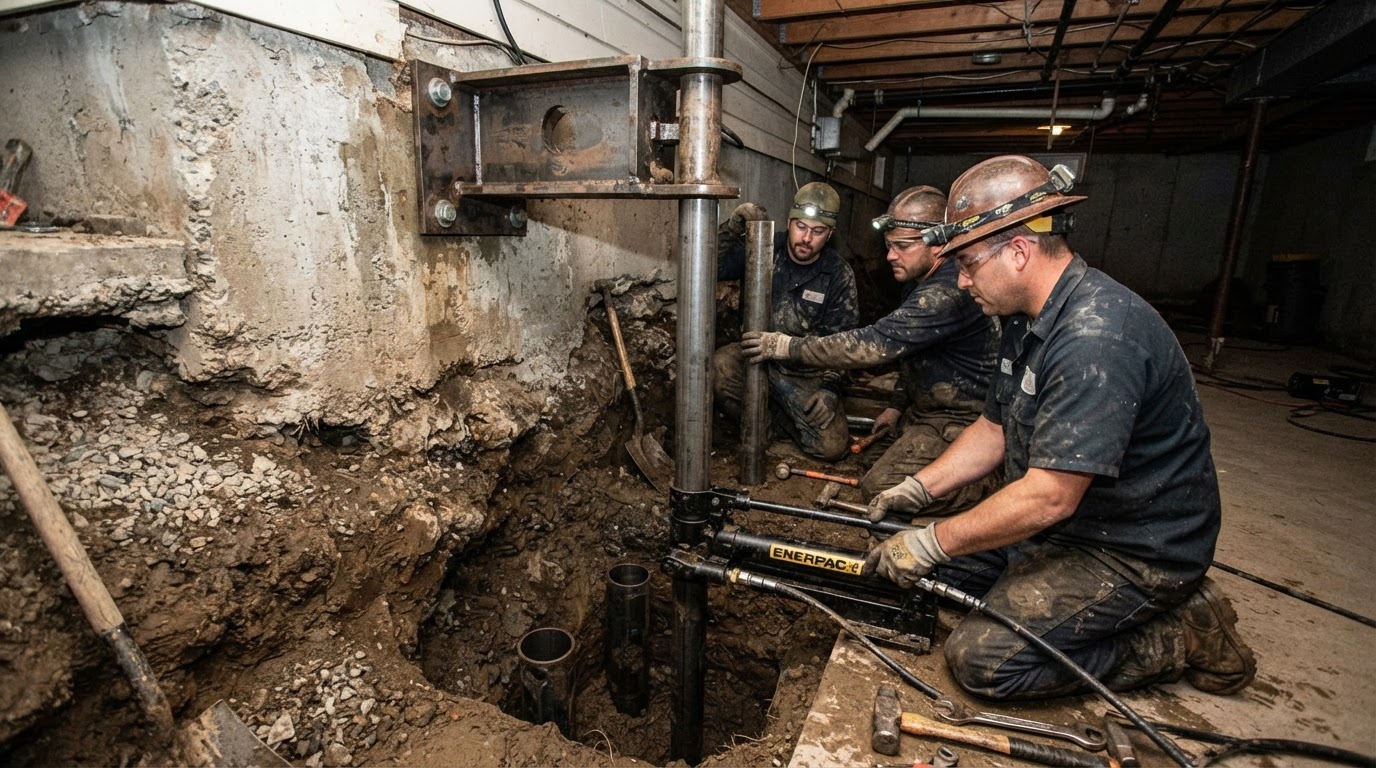
For homes with serious foundation movement, the repair method depends on what kind of foundation you have and how bad the damage is. For a bowing basement wall, carbon fiber straps are a common solution. They are strong, relatively unobtrusive, and they can hold a wall in place for decades. But they only work if the wall is still structurally sound otherwise. If the concrete is crumbling, you might need excavation and a new wall or a system of helical piers to transfer the load to deeper, stable soil.
When to Call for an Engineered Foundation Report
I tell homeowners that if they see cracks wider than a quarter inch, or if a wall is bowing more than an inch, it is time to get an engineered foundation report. A structural engineer will look at the house, the soil, and the damage, then tell you what needs to happen. That report is gold. It gives you a plan that the Wauwatosa building code will accept, and it gives contractors a clear scope of work. Without it, you are guessing, and guessing on foundation work can get expensive fast.
The engineer might recommend helical piers if the soil is weak. Helical piers are like big screws that go down into the ground until they hit load-bearing soil. They can be used to underpin a sinking corner or to support a wall that has shifted. I have used them on a house near Hart Park where the corner had dropped four inches. The piers stopped the movement completely. For a pier and beam foundation, the fix might be different. Those houses are built on a grid of piers and beams, and the issue is often that one pier has settled or rotted. You can replace individual piers without touching the rest of the structure.
Waterproofing and Drainage
Waterproofing is not just about keeping the basement dry. It is about protecting the foundation from further damage. If you have a crack that leaks water every time it rains, that water is washing out the soil under your footing. Over time, that creates a void, and the footing settles. That is how you get a sinking floor. So basement waterproofing is a preventive measure as much as a repair.
There are several ways to handle it. On the inside, you can install an interior drainage system, which is basically a channel around the perimeter of the basement floor that collects water and sends it to a sump pump. The sump pump pushes the water out to the yard or the storm sewer. That is effective, but it does not fix the source. For that, you need exterior work: a French drain around the foundation, proper grading, and downspouts that extend at least six feet from the house. If the budget allows, excavating the foundation and applying a waterproof membrane on the outside is the best long-term solution. It is expensive, but it solves the problem at the source.
Practical Steps for Homeowners
If you think your house has a foundation problem, here is what I suggest:
- Get a home inspection from someone who knows old houses. A good inspector will spot the signs and tell you if you need an engineer.
- Check your gutters and downspouts. Make sure water is going away from the house, not into the foundation.
- Look at the grading. The soil should slope away from the house for at least six feet.
- If you have a crawl space, get in there with a flashlight and check for standing water, mold, or damp insulation.
- Do not ignore small cracks. They often grow, and the repair gets more expensive the longer you wait.
Foundation repair wauwatosa is not a one-size-fits-all thing. Every house is different, and the right fix depends on the soil, the foundation type, and the extent of the damage. But the common thread is water. If you manage the water, you give your foundation a fighting chance. If you ignore it, you will be back in five years with a bigger problem.
The Bottom Line
Older homes have character, but they also have old foundations. That is just part of the deal. If you stay on top of the maintenance and fix problems when they are small, a concrete foundation or a block foundation can last another hundred years. But if you let water do its thing, you will end up with structural issues that require excavation, helical piers, or even a new foundation. That is the expensive kind of repair.
So if you see a crack, call someone who knows what they are doing. Get an engineered foundation report if there is any doubt. And remember that the cheapest fix is the one that deals with the water first. That is the lesson I have learned from thirty years of working on these old houses in Wauwatosa.